






Your shopping cart is currently empty.
Eyewash Stations

Emergency Eyewash Stations for Workplace Safety
Emergency eyewash stations provide immediate flushing following accidental eye exposure to hazardous substances. The appropriate type of eyewash equipment depends on the workplace hazard, installation location, available water supply and environmental conditions.
OSHA 29 CFR 1910.151(c) requires suitable facilities for quick drenching or flushing within the work area for immediate emergency use where the eyes or body of a person may be exposed to injurious corrosive materials.
ANSI/ISEA Z358.1-2014 (R2020) establishes minimum performance and use requirements for emergency eyewash and shower equipment. ANSI currently identifies this as the most recent edition of Z358.1. The standard covers eyewashes, eye/face washes, emergency showers and combination units; it also addresses personal wash units and drench hoses as supplemental equipment.
Select Safety Sales supplies emergency eyewash equipment for manufacturing facilities, laboratories, construction sites, schools and universities, healthcare facilities, utilities, government agencies and other workplaces where emergency flushing equipment may be needed.
Types of Emergency Eyewash Stations
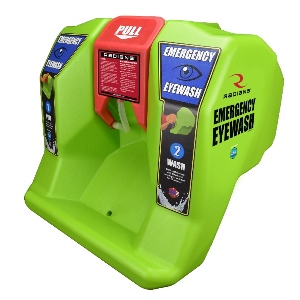
Portable Eyewash Stations
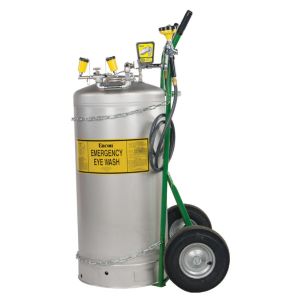
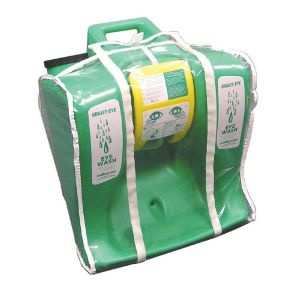
Portable and self-contained eyewash stations provide emergency flushing in locations where a dependable water connection is unavailable or impractical.
Portable systems are useful for construction sites, temporary work areas, remote locations and facilities where emergency equipment may need to be relocated.
Available configurations can include gravity-fed eyewash stations, self-contained systems, sealed-cartridge units and heated portable eyewash stations.
When selecting portable equipment for use as a primary emergency eyewash, verify the manufacturer's stated compliance with applicable ANSI/ISEA Z358.1 requirements.
Plumbed Eyewash Stations
Plumbed eyewash stations connect directly to a facility's water supply and are commonly used for permanent installations.
They are frequently installed in manufacturing facilities, laboratories, maintenance areas, chemical-handling locations and other workplaces with fixed hazard locations.
Available configurations include pedestal-mounted, wall-mounted and other permanently installed eyewash systems.
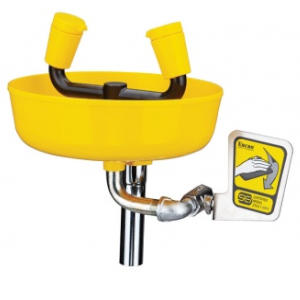
Wall-Mounted Eyewash Stations
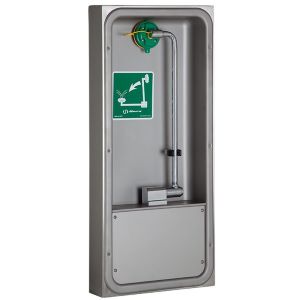
Wall-mounted eyewash stations provide a space-efficient option for permanent locations where floor space is limited.
Connected to the facility's water supply, these units are commonly used in laboratories, maintenance rooms, manufacturing facilities and other areas where hazardous materials may create an eye-exposure risk.
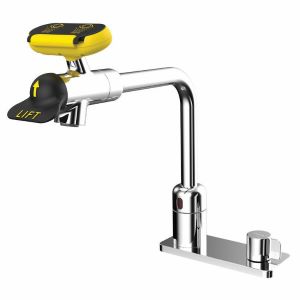
Eye/Face Wash Stations
Eye/face wash stations provide flushing coverage for both the eyes and surrounding facial area.
These systems should be considered where the identified workplace hazard creates the possibility of exposure extending beyond the eyes.
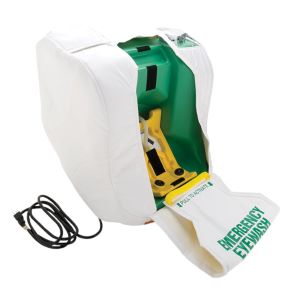
Heated Eyewash Stations
Cold environments create additional challenges for emergency eyewash equipment.
Heated and freeze-protected eyewash stations are designed for locations where freezing temperatures could interfere with conventional emergency flushing equipment.
Applications can include outdoor industrial facilities, construction sites, utilities, oil and gas operations, remote locations and unheated buildings.
Eyewash Replacement Parts
An existing eyewash station does not necessarily need to be replaced when an individual component becomes worn or damaged.
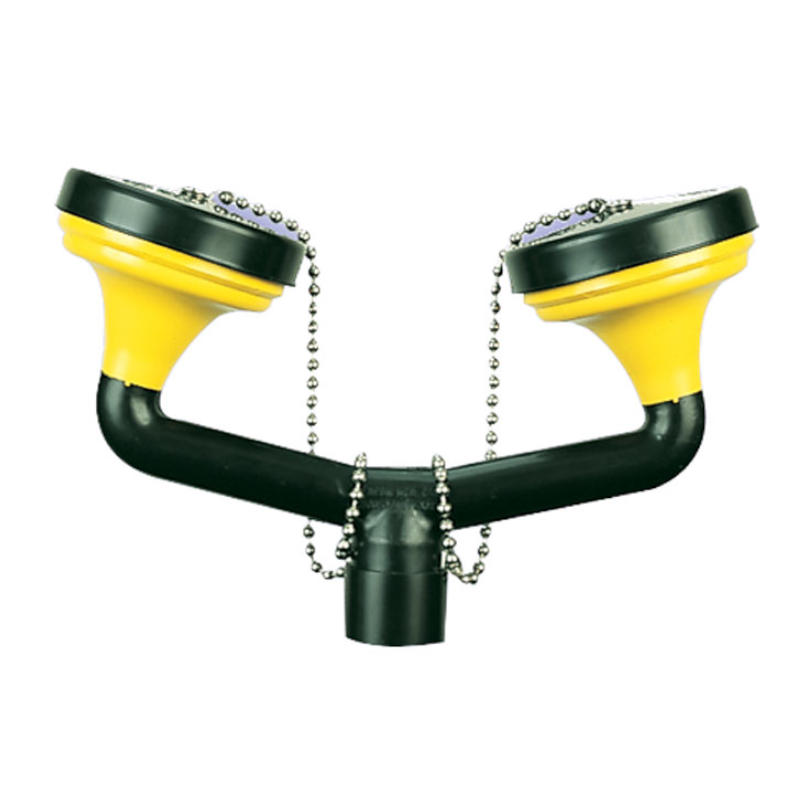
Select Safety Sales carries eyewash replacement parts and components for repairing and maintaining existing emergency eyewash equipment.
Available replacement components can include:
- Eyewash spray heads
- Dust covers
- Eyewash bowls
- Valves
- Flow controls
- Activation handles and paddles
- Hoses
- Drain components
- Actuation components
- Replacement hardware
Whenever possible, replacement components should be matched to the manufacturer and model of the existing eyewash station.
How to Choose an Emergency Eyewash Station
Choosing the proper emergency eyewash equipment begins with evaluating the specific workplace hazard and where an exposure could occur.
Consider the available water supply, type of potential exposure, installation location, environmental conditions and manufacturer's specifications.
| Workplace Requirement | Equipment to Consider |
|---|---|
| Permanent location with reliable water supply | Plumbed Eyewash Station |
| No permanent water connection | Portable or Self-Contained Eyewash |
| Eye and surrounding facial exposure | Eye/Face Wash Station |
| Limited floor space | Wall-Mounted Eyewash Station |
| Outdoor or freezing environment | Heated or Freeze-Protected Eyewash |
| Existing eyewash needs repair | Eyewash Replacement Parts |
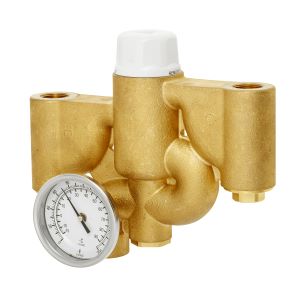
| Flushing-fluid temperature needs regulation | Thermostatic Mixing Valve |
| Potential eye and full-body exposure | Combination Eyewash & Safety Shower |
OSHA and ANSI/ISEA Eyewash Requirements
Understanding OSHA 29 CFR 1910.151(c) and ANSI/ISEA Z358.1
OSHA and ANSI/ISEA have different roles in workplace emergency eyewash safety.
OSHA 29 CFR 1910.151(c) requires suitable quick-drenching or flushing facilities within the work area for immediate emergency use where a person's eyes or body may be exposed to injurious corrosive materials.
ANSI/ISEA Z358.1 provides detailed minimum performance and use requirements for emergency eyewash and shower equipment. The current edition listed by ANSI is ANSI/ISEA Z358.1-2014 (R2020).
OSHA maintains numerous interpretations of 1910.151(c), including interpretations addressing the use of ANSI Z358.1 as guidance for complying with OSHA's emergency flushing requirement.
Key Eyewash Safety Considerations
When selecting and installing emergency eyewash equipment:
- Evaluate the specific workplace hazard.
- Provide rapid access to appropriate emergency flushing equipment.
- Keep the path to the eyewash clear and unobstructed.
- Select equipment appropriate for the type of potential exposure.
- Consider flushing-fluid temperature requirements.
- Inspect and maintain equipment so it remains ready for emergency use.
- Train employees on the location and proper use of emergency eyewash equipment.
The exact installation, performance, inspection and maintenance requirements should be determined using the current ANSI/ISEA standard, applicable OSHA requirements and the equipment manufacturer's instructions.
Eyewash Station Inspection & Maintenance
Keeping Emergency Eyewash Equipment Ready for Use
Emergency eyewash equipment should be inspected and maintained according to applicable requirements and the manufacturer's instructions.
Plumbed Eyewash Stations
Plumbed eyewash equipment requires regular activation and inspection to verify that it is operating properly.
Regular activation also helps clear stagnant water and sediment from supply lines.
Portable and Self-Contained Eyewash Stations
Service requirements vary according to the design of the unit.
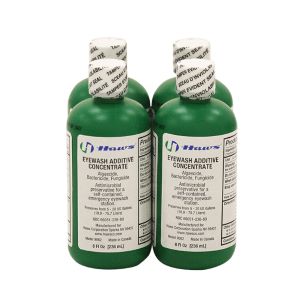
Some portable systems use potable water with an approved preservative, while others use factory-sealed flushing-fluid cartridges.
Follow the manufacturer's instructions for fluid or cartridge replacement, cleaning, inspection and service intervals.
Portable vs. Plumbed Eyewash Stations
| Feature | Portable Eyewash | Plumbed Eyewash |
|---|---|---|
| Permanent water connection | Generally not required | Required |
| Installation | Minimal to moderate | Plumbing installation required |
| Mobility | Can be relocated | Fixed installation |
| Typical application | Remote or temporary locations | Permanent hazard locations |
| Routine service | Fluid/cartridge inspection and service | Water supply and equipment inspection |
| Cold-weather options | Heated models available | Freeze-protected configurations available |
| Best suited for | Locations without dependable plumbing | Facilities with permanent water supply |
Frequently Asked Questions About Eyewash Stations
When is an emergency eyewash station required?
OSHA 29 CFR 1910.151(c) requires suitable facilities for quick drenching or flushing within the work area for immediate emergency use where a person's eyes or body may be exposed to injurious corrosive materials.
The specific workplace hazards should be evaluated when determining what emergency flushing equipment is necessary.
What is ANSI/ISEA Z358.1?
ANSI/ISEA Z358.1 is the American National Standard establishing minimum performance and use requirements for emergency eyewash and shower equipment. The most recent edition currently listed by ANSI is ANSI/ISEA Z358.1-2014 (R2020).
Is an ANSI-compliant eyewash station OSHA certified?
No. I would not use “OSHA certified” to describe an eyewash station.
OSHA establishes workplace requirements, while ANSI/ISEA Z358.1 establishes detailed consensus-standard requirements for emergency eyewash and shower equipment.
Should I choose a portable or plumbed eyewash station?
A plumbed eyewash station is generally appropriate when a dependable water supply is available at a permanent hazard location.
A portable or self-contained eyewash station can be appropriate where plumbing is unavailable or impractical or where the unit needs to be relocated.
What is the difference between an eyewash and an eye/face wash?
An eyewash is designed primarily to flush the eyes. An eye/face wash provides flushing coverage to the eyes and surrounding facial area and may be appropriate where the identified hazard creates the possibility of broader facial exposure.
Are eyewash bottles a substitute for an emergency eyewash station?
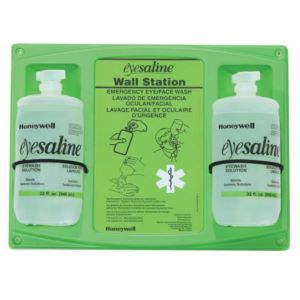
Eyewash bottles and personal wash units should not be presented as replacements for required primary emergency eyewash equipment. ANSI/ISEA Z358.1 classifies personal wash units as supplemental equipment.
How often should eyewash stations be inspected?
Inspection and service requirements depend on the type of equipment. Plumbed and self-contained eyewash systems have different requirements.
Follow the applicable ANSI/ISEA Z358.1 requirements and the manufacturer's instructions for the particular model.
Can an existing eyewash station be repaired?
Often, yes. Spray heads, dust covers, bowls, valves, flow controls, activation assemblies and other components may be replaceable.
Identify the manufacturer and model number of the existing unit whenever possible before ordering replacement parts.
When should a combination eyewash and safety shower be considered?
Where the workplace hazard creates the potential for exposure to both the eyes and body, a combination eyewash and safety shower may be appropriate.
Those systems can be found in our separate Safety Showers category.
Shop Eyewash Stations & Parts by Manufacturer
Select Safety Sales offers emergency eyewash stations and replacement components from leading safety equipment manufacturers.
Customers searching for replacement components should identify the manufacturer and model of their existing equipment whenever possible to help determine compatibility.
For the final live page, I would make your major manufacturer names/logos links rather than stuffing a bunch of manufacturer names into this paragraph.
Need Help Selecting an Eyewash Station?
Not sure whether your application calls for a portable, plumbed, wall-mounted, heated or eye/face wash system?
Select Safety Sales can help you compare emergency eyewash equipment and assist in locating replacement components for existing eyewash stations.
Call 866-864-3495 for assistance selecting eyewash equipment for your facility.
