





Your shopping cart is currently empty.
Plumbed Eyewash

Plumbed eyewash stations provide a permanent emergency flushing solution for workplaces with a dependable water supply. Common configurations include wall-mounted, pedestal-mounted and eye/face wash systems for industrial facilities, laboratories, manufacturing plants, healthcare facilities and other permanent hazard locations.
Select Safety Sales offers plumbed emergency eyewash equipment from leading manufacturers including Haws, Speakman, Bradley and Encon, with configurations designed to meet applicable ANSI/ISEA Z358.1 requirements.
Choose a plumbed eyewash category below to find the installation style that best fits your facility.
Plumbed Eyewash Stations for Permanent Installations
Plumbed eyewash stations connect directly to a facility's water supply to provide emergency flushing at permanent workplace hazard locations. They are commonly installed in manufacturing plants, laboratories, chemical processing areas, maintenance facilities, healthcare environments, schools, universities and other locations where hazardous materials may contact the eyes.
Unlike self-contained portable systems, plumbed eyewash stations do not rely on a stored reservoir of flushing fluid. When properly installed and maintained, the connected water supply provides a continuous source of flushing fluid for emergency use.
Plumbed eyewash equipment is available in several configurations. The best choice depends on the hazard, available mounting space, plumbing location, required coverage and facility layout.
Types of Plumbed Eyewash Stations
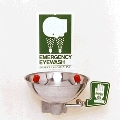
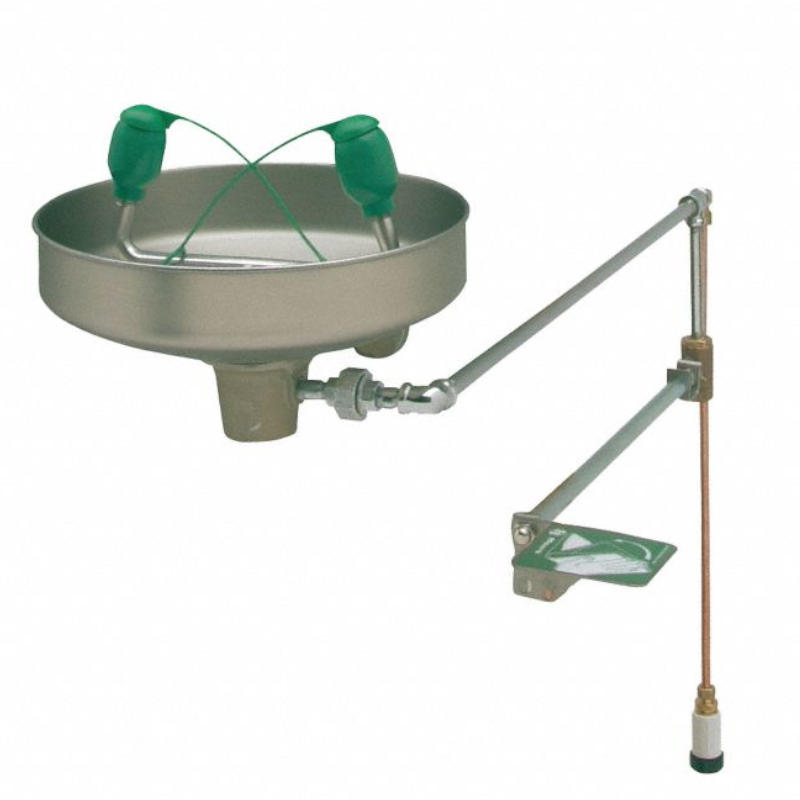
Wall-Mounted Eyewash Stations
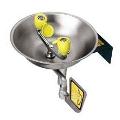
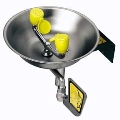
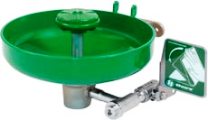
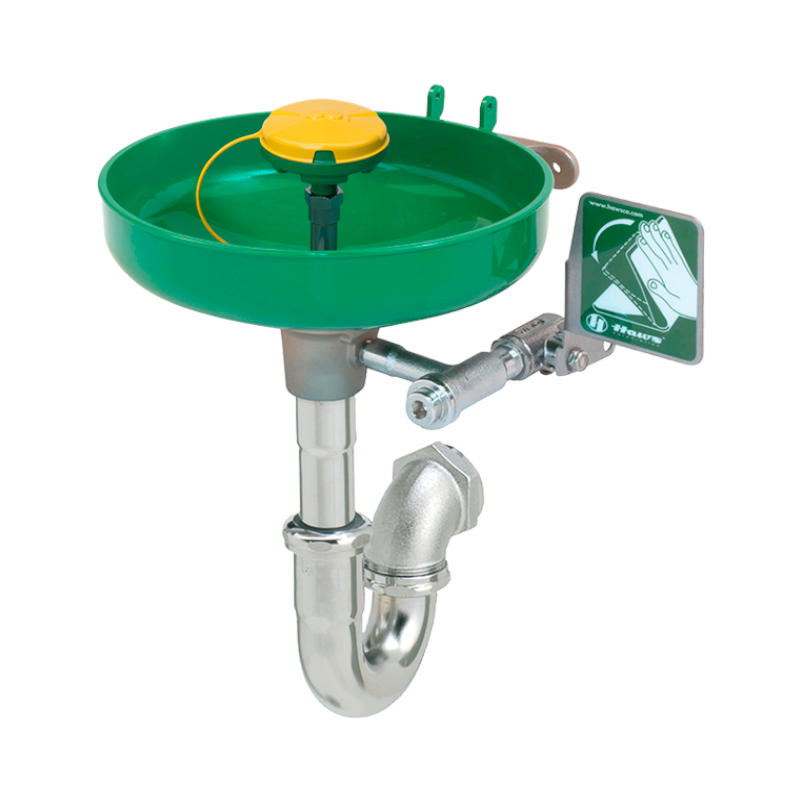
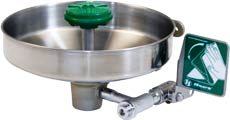
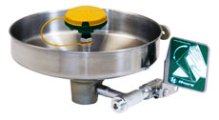
Wall-mounted eyewash stations provide a permanent emergency flushing location while conserving floor space. They are commonly used in laboratories, maintenance rooms, manufacturing facilities and other work areas where the fixture can be securely mounted to a wall close to the hazard.
Wall-mounted models are available as conventional eyewashes and eye/face washes. When selecting a unit, verify the required mounting height, operating clearance, water connection and drainage requirements.
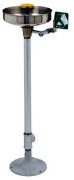
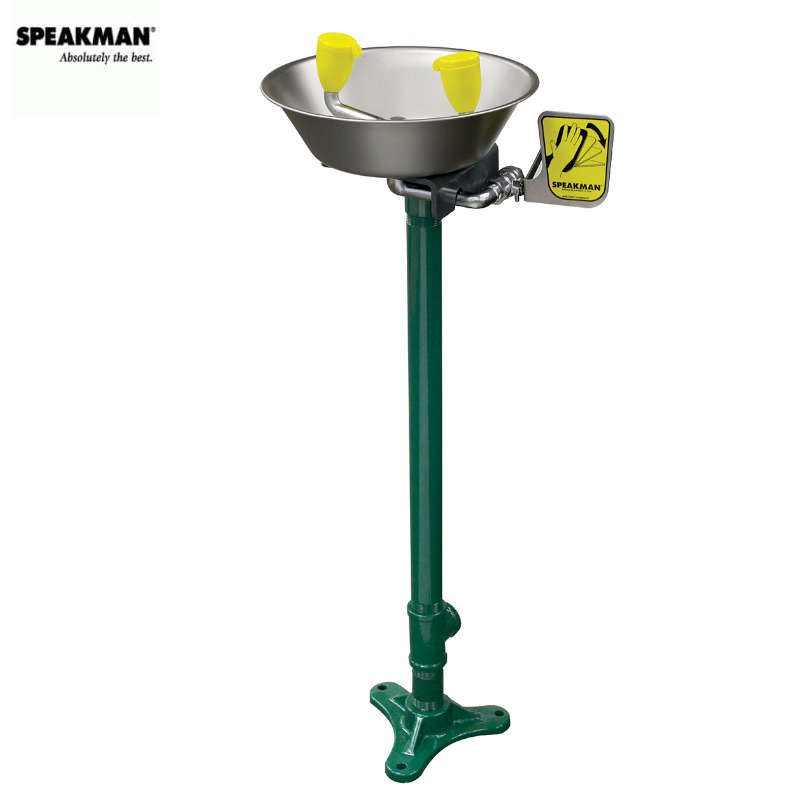
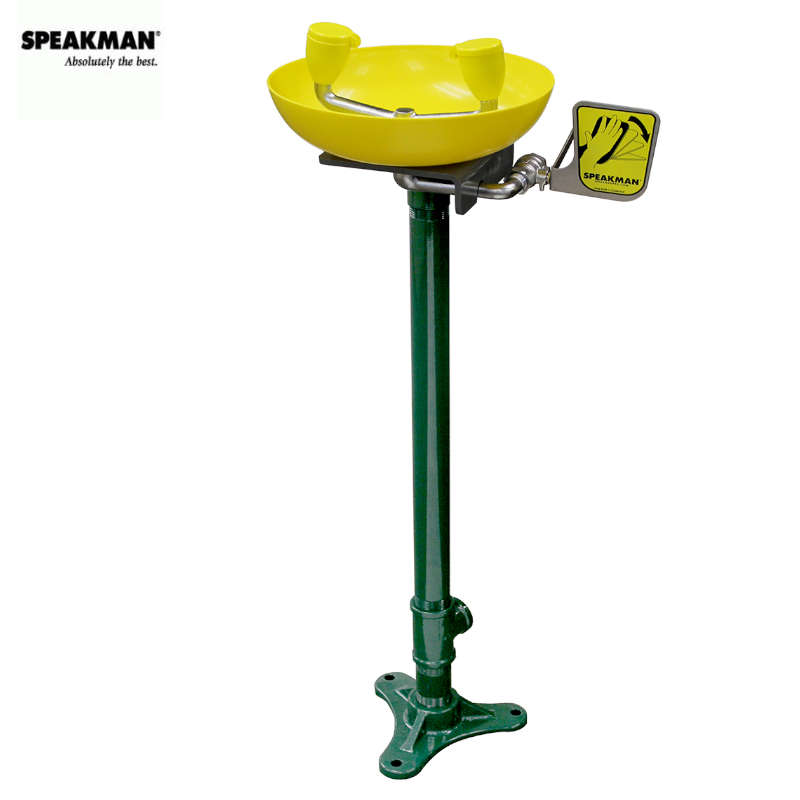
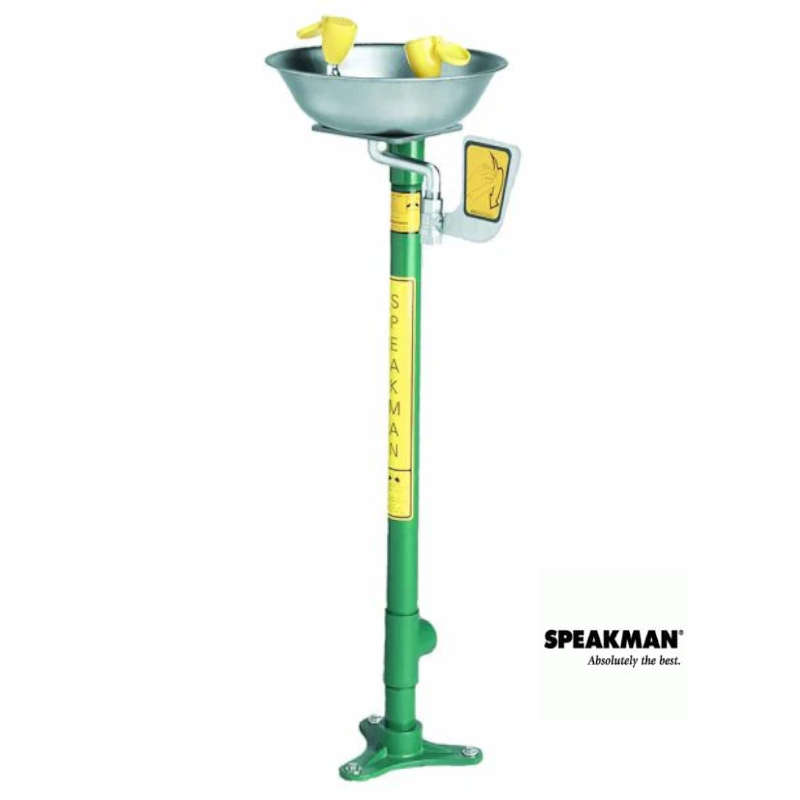
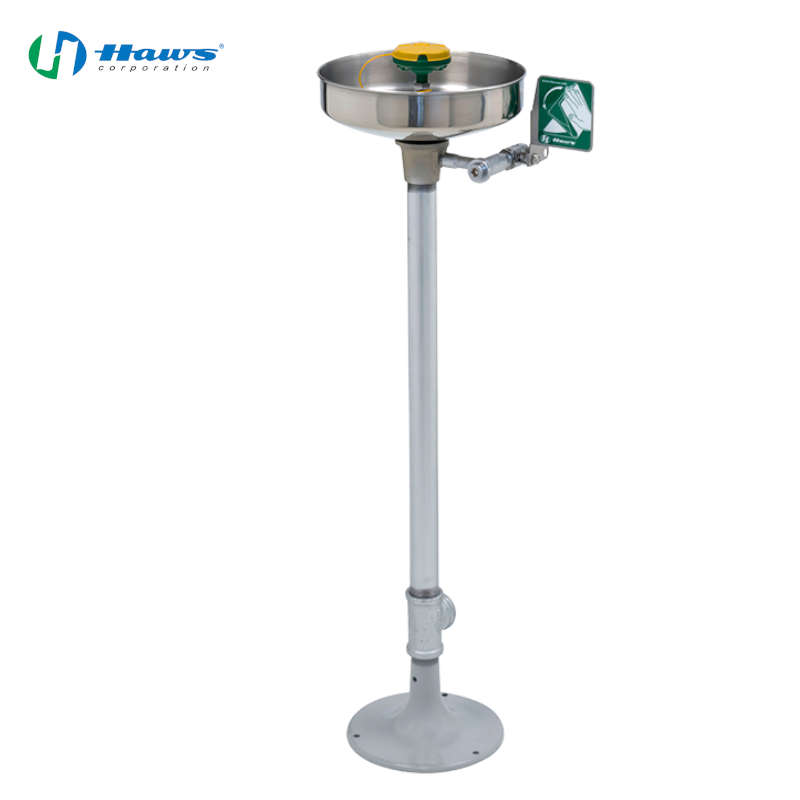
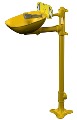
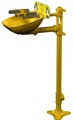
Pedestal-Mounted Eyewash Stations
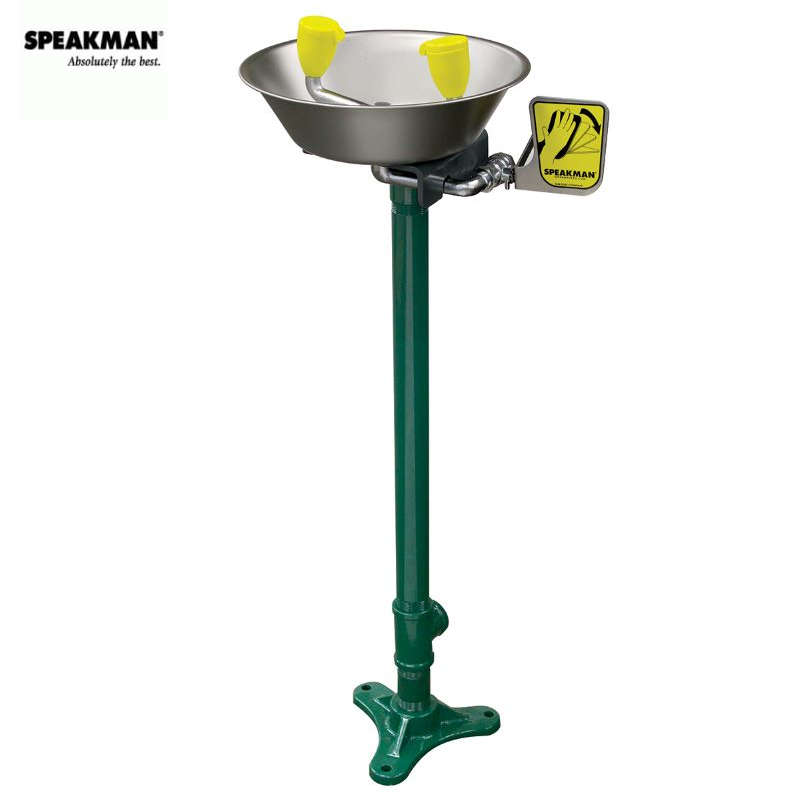
Pedestal-mounted eyewash stations are floor-mounted fixtures designed for open work areas or locations where suitable wall mounting is unavailable or impractical.
Pedestal units can be particularly useful in production areas, industrial facilities and other locations where emergency equipment needs to be positioned away from a wall. Placement should protect the fixture from vehicle or equipment traffic while keeping access to the eyewash clear.
Eye/Face Wash Configurations
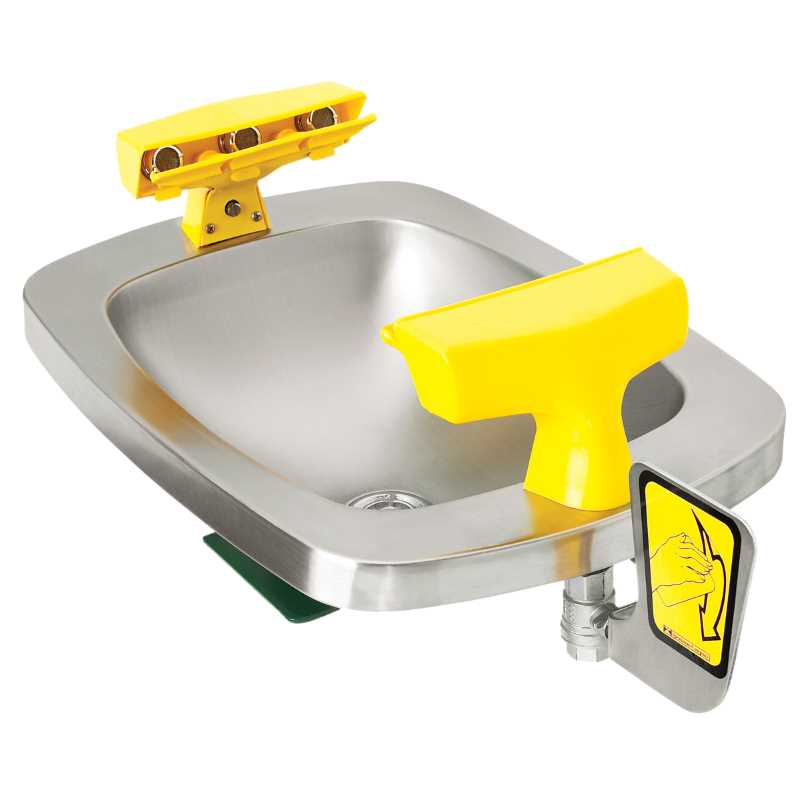
Some plumbed emergency flushing fixtures are designed as eye/face washes rather than conventional eyewashes. These units provide a broader flushing pattern for hazards that may affect both the eyes and the surrounding facial area.
Eye/face wash capability is available in different mounting configurations, including wall-mounted and pedestal-mounted models. The equipment should be selected according to the type and extent of the potential workplace exposure.
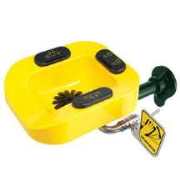
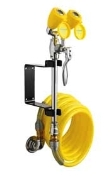
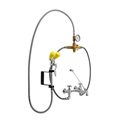
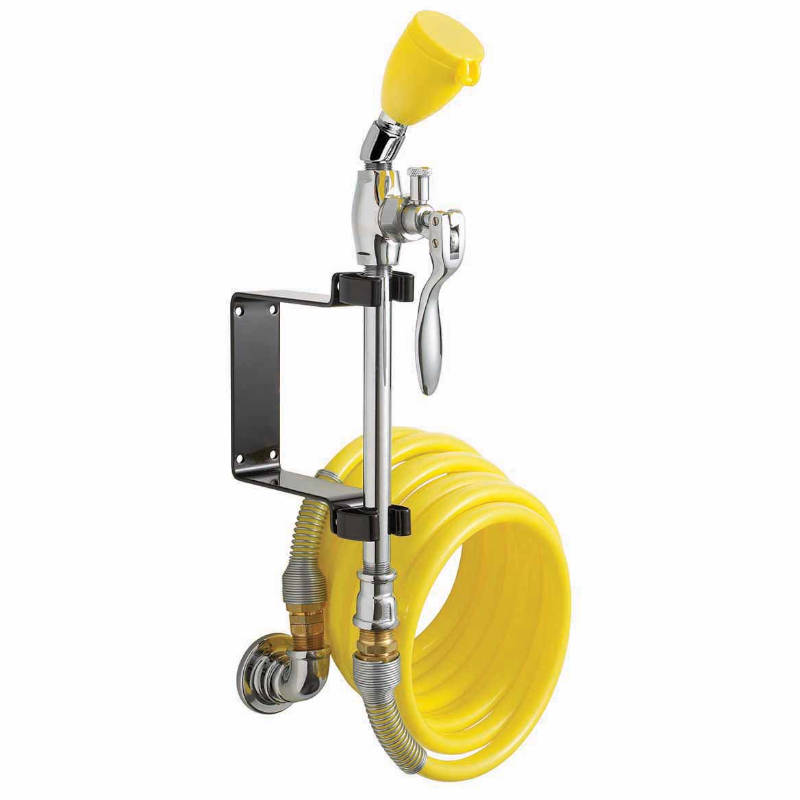
Drench Hoses & Hand-Held Eye/Face Washes
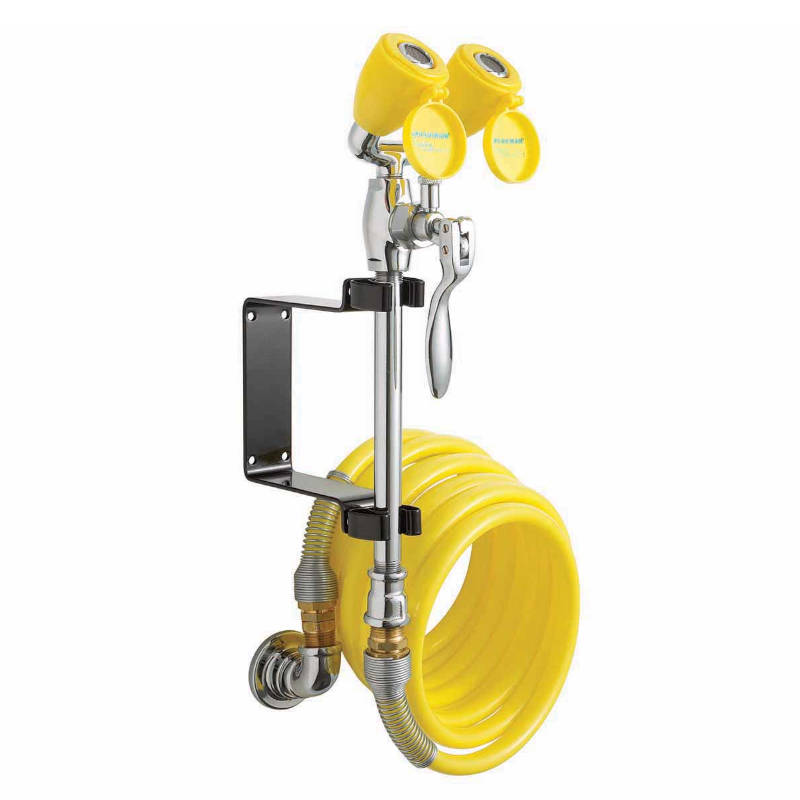
Drench hoses and hand-held eye/face wash units provide flexible directed flushing and can be useful for rinsing areas that may be difficult to reach with a fixed spray pattern.
However, not every drench hose is designed to serve as the primary emergency eyewash. Some products are supplemental equipment. Always verify the manufacturer's stated performance and intended use before relying on a hand-held unit as primary emergency flushing equipment.
How to Choose a Plumbed Eyewash Station
Choosing a plumbed eyewash begins with the workplace hazard and the location where an exposure could occur. Once a permanent water supply is available, consider mounting style, required flushing coverage, drainage, water temperature and available operating space.
| Installation or Hazard | Plumbed Eyewash Type to Consider |
|---|---|
| Permanent hazard location with available wall space | Wall-mounted eyewash station |
| Open work area or limited wall-mounting options | Pedestal-mounted eyewash station |
| Potential exposure to eyes and surrounding facial area | Eye/face wash configuration |
| Need for directed or flexible flushing | Drench hose or hand-held eye/face wash as appropriate |
| Incoming water temperature requires control | Eyewash with properly sized thermostatic mixing valve |
| Potential exposure to eyes and body | Evaluate a combination eyewash and safety shower |
Plumbing, Drainage & Installation Considerations
Plumbed eyewash equipment requires more installation planning than most self-contained systems. Before ordering, confirm the fixture dimensions, water connection, available pressure, mounting location, operating clearances and drainage requirements.
The eyewash should be positioned so it remains readily accessible from the identified hazard. Equipment, stored materials, doors and other obstacles should not interfere with the route to the fixture or prevent immediate activation.
Drainage should also be considered during installation. Routine activation and emergency use can release a significant amount of water, so the facility should have an appropriate method for managing both testing water and potentially contaminated flushing fluid.
Before ordering a plumbed eyewash:
- Confirm available wall or floor space.
- Verify the water-supply connection and available pressure.
- Review drainage requirements.
- Check required operating clearances.
- Determine how tepid flushing fluid will be provided.
- Confirm the manufacturer's installation specifications.
Tepid Water & Thermostatic Mixing Valves
Emergency eyewash equipment must provide flushing fluid within the applicable tepid temperature range. The temperature of the facility's incoming water supply should therefore be considered during the design of a plumbed eyewash installation.
Where the available water supply cannot consistently provide appropriate flushing-fluid temperature, a thermostatic mixing valve may be required.
Emergency-equipment mixing valves should be properly sized for the required flow and installed according to the valve manufacturer's instructions. The facility should also consider available hot-water capacity and the performance of the system under expected operating conditions.
OSHA & ANSI/ISEA Considerations for Plumbed Eyewash Stations
OSHA 29 CFR 1910.151(c) requires suitable facilities for quick drenching or flushing of the eyes and body within the work area for immediate emergency use where employees may be exposed to injurious corrosive materials.
ANSI/ISEA Z358.1 provides detailed criteria for emergency eyewash and shower equipment, including equipment performance, location, operation, flushing-fluid temperature, inspection and maintenance.
When selecting plumbed eyewash equipment, review the manufacturer's specifications and stated ANSI/ISEA Z358.1 conformance together with the facility's workplace hazard assessment.
Important:
OSHA establishes workplace requirements but does not certify individual eyewash products. Claims such as “ANSI/ISEA Z358.1 compliant” or “designed to meet ANSI/ISEA Z358.1” should be used only when supported by the equipment manufacturer.
OSHA establishes workplace requirements but does not certify individual eyewash products. Claims such as “ANSI/ISEA Z358.1 compliant” or “designed to meet ANSI/ISEA Z358.1” should be used only when supported by the equipment manufacturer.
Weekly Activation & Maintenance
Plumbed emergency eyewash equipment should be activated weekly to verify operation and help clear sediment or stagnant water from the supply line. Equipment should also be inspected and maintained according to applicable ANSI/ISEA guidance and the manufacturer's instructions.
Routine checks should include:
- Immediate activation of the eyewash.
- Proper operation of the valve and activation mechanism.
- Condition and cleanliness of the spray heads.
- Proper operation of dust covers.
- Consistent flushing pattern.
- Leaks, damaged components or clogged outlets.
- Accessibility and an unobstructed path to the equipment.
- Flushing-fluid condition and temperature as applicable.
- Visibility of eyewash identification signage.
Damaged spray heads, valves, bowls, flow controls and other components should be repaired promptly so the equipment remains ready for emergency use.
Plumbed vs. Portable Eyewash Stations
Both plumbed and self-contained eyewash stations can provide primary emergency flushing when properly selected for the hazard and when the equipment meets the applicable requirements. The primary difference is how the flushing fluid is supplied.
| Feature | Plumbed Eyewash | Portable Eyewash |
|---|---|---|
| Water Supply | Connected to permanent water supply | Self-contained flushing-fluid supply |
| Typical Location | Permanent hazard location | Permanent, temporary or remote location |
| Installation | Requires plumbing | Generally minimal to moderate installation |
| Mobility | Fixed | May be relocatable depending on model |
| Routine Service | Weekly activation and periodic inspection | Fluid, preservative or cartridge service depending on design |
| Remote Locations | Usually requires plumbing infrastructure | Well suited where plumbing is unavailable |
For work areas without a suitable permanent water supply, see our Portable Eyewash Stations.
Frequently Asked Questions About Plumbed Eyewash Stations
What is a plumbed eyewash station?
A plumbed eyewash station is emergency flushing equipment permanently connected to a facility's water supply. Unlike a self-contained eyewash, it does not rely on a stored tank or cartridge as its primary flushing-fluid source.
When should I choose a plumbed eyewash?
A plumbed eyewash is generally appropriate when the hazard location is permanent and a dependable water supply can be provided at the required location. The facility should also be able to accommodate installation, drainage, temperature control and routine activation.
Should I choose a wall-mounted or pedestal-mounted eyewash?
Wall-mounted eyewashes are well suited for permanent installations where suitable wall space and support are available. Pedestal-mounted units are useful in open work areas or locations where wall mounting is impractical.
What is the difference between an eyewash and an eye/face wash?
A conventional eyewash is designed primarily to flush the eyes. An eye/face wash provides a broader flushing pattern intended to rinse both the eyes and surrounding facial area. Selection should be based on the potential exposure.
Does a plumbed eyewash need a drain?
Drainage requirements depend on the fixture, installation and facility. Even when a floor drain is not required for the fixture itself, the facility should plan how water from routine testing and emergency use will be safely managed.
Does a plumbed eyewash need a thermostatic mixing valve?
A thermostatic mixing valve may be needed when the available water supply cannot consistently provide flushing fluid within the applicable tepid range. The valve must be properly sized for the emergency fixture and installed according to the manufacturer's specifications.
How often should a plumbed eyewash station be activated?
Plumbed emergency eyewash equipment should be activated weekly. Facilities should also follow applicable ANSI/ISEA guidance and the equipment manufacturer's inspection and maintenance instructions.
Can a drench hose replace a plumbed eyewash station?
Not automatically. Many drench hoses and hand-held flushing products are supplemental. A product should only be relied upon as primary emergency eyewash equipment when the complete installation meets the applicable requirements and the manufacturer's specifications support that use.
Can a plumbed eyewash station be repaired?
Yes. Many plumbed eyewash stations can be maintained with replacement spray heads, dust covers, bowls, valves, flow controls, activation handles and other components. Replacement parts should be matched to the manufacturer and model whenever possible.
Need Help Selecting a Plumbed Eyewash Station?
Need help comparing a wall-mounted, pedestal-mounted or eye/face wash configuration?
Select Safety Sales can help you compare plumbed eyewash equipment based on your workplace hazard, available space, plumbing, water temperature and installation requirements.
Call 866-864-3495 for assistance selecting a plumbed eyewash station.
Plumbed Eyewash Resources
Emergency Eyewash Station Requirements
Review OSHA requirements and important ANSI/ISEA Z358.1 considerations for emergency eyewash equipment.
Read Eyewash Requirements ›How to Choose an Eyewash Station
Compare plumbed, portable, wall-mounted, heated and other emergency eyewash configurations for your facility.
Read the Selection Guide ›How to Use an Eyewash Station
Review the immediate steps employees should follow after an eye exposure, including activation, flushing and obtaining medical assistance.
Read How to Use an Eyewash Station ›