





Your shopping cart is currently empty.
Eyewash Safety on the Job
This illustrated checklist highlights eight important steps for emergency eyewash readiness—from assessing workplace hazards and keeping access clear to testing equipment and training employees. Use it as a visual reminder alongside your facility’s written safety procedures, hazard assessment and equipment instructions.
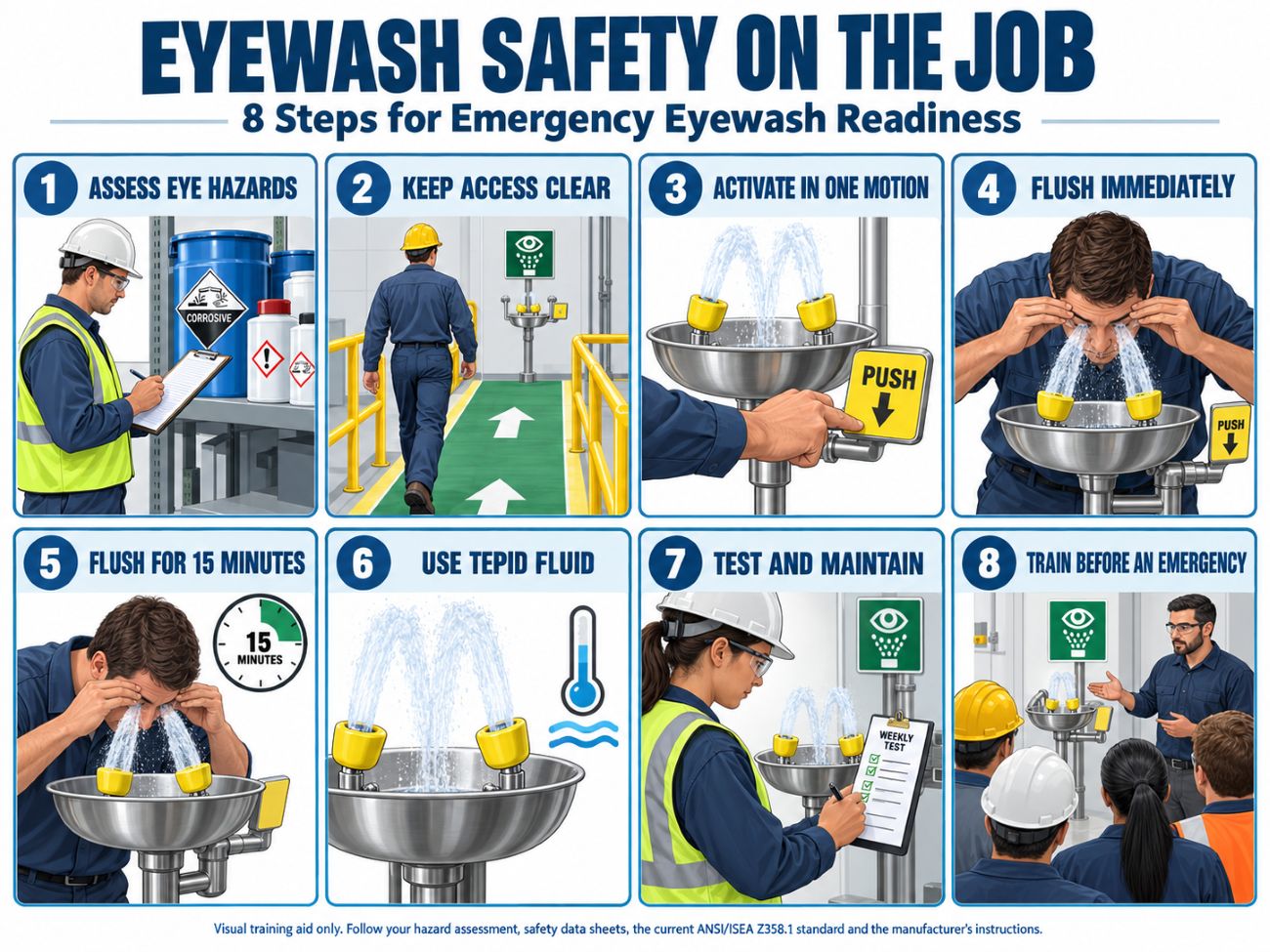
8 Steps for Emergency Eyewash Readiness
1. Assess Eye-Exposure Hazards
Identify corrosive materials and other substances that could injure employees’ eyes.
2. Provide Quick, Unobstructed Access
Locate eyewash equipment where exposed workers can reach it quickly without encountering obstacles.
3. Use One-Motion Activation
The eyewash should activate easily and continue operating without requiring the user’s hands.
4. Begin Flushing Immediately
Start flushing at once, hold the eyelids open and allow the flushing fluid to reach both eyes.
5. Provide the Required Flushing Time
Continue flushing for at least 15 minutes or as directed by the chemical’s safety data sheet and medical personnel.
6. Provide Tepid Flushing Fluid
Use flushing fluid within the temperature range specified by the applicable standard and equipment instructions.
7. Test and Maintain the Equipment
Activate plumbed units weekly and inspect all equipment according to the applicable standard and manufacturer’s instructions.
8. Train Employees Before an Emergency
Workers should know the eyewash location, how to activate it and what to do after an exposure.
Using This Eyewash Safety Checklist
Emergency eyewash readiness begins before an exposure occurs. Employers should evaluate the substances used in each work area, determine where suitable flushing equipment is needed and make sure employees can reach and operate that equipment quickly. Eyewash stations should remain visible, accessible and properly maintained.
Employees should be trained to begin flushing immediately following an eye exposure, hold their eyelids open and follow the chemical’s safety data sheet and the facility’s emergency procedures. Appropriate medical evaluation should also be obtained after an exposure.
