





Your shopping cart is currently empty.
Eyewash Stations in the Workplace
Each year there are close to one million eye injuries in the workplace. While this number might astound us, it also shows us the importance of proper eye protection and safety standards needed in the workplace. Even with the proper use of safety glasses, goggles and face shields, the risk of an accident is decreased tremendously but is still present.
If an unforeseen accident occurs, a company or organization should have the proper eyewash stations available and have them strategically positioned to treat any eye emergency within a matter of seconds.
Eyewash OSHA Regulations and ANSI Standards:
Several OSHA regulations require that an emergency eyewash or shower be provided whenever employees are exposed to corrosive materials. This equipment should be in compliance with ANSI Z358.1-2009. This standard is promulgated by the American National Standards Institute. It is a voluntary standard that offers guidance for the proper use, design, performance, maintenance and installation of eyewash stations.
Several factors must be taken into account in the decision to strategically position eyewash stations in your workplace for employee safety.
Assessment of Work Area:
The first step in the process of selecting the right stations for your facility is to do a proper assessment of the work area and injury potential for each possible hazard. The layout of the plant will have a significant effect on the placement of the units.
Location of Eyewash Stations:
The ANSI standard provides that this emergency equipment be installed within ten seconds walking distance from the hazard and on the same level as the hazard. Employers should make periodic checks of the site to be sure that the area is free and clear of any objects that could block accessibility to the equipment in an emergency situation. It should be in a well lit visible area.
Water Supply from the Eyewash Station:
The water supply from the unit should be tepid or lukewarm and it must provide at least fifteen minutes of a continuous flow of water.
Types of Stations and the Maintenance Required:
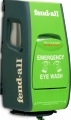
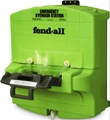
- Plumbed eyewash stations draw tap water from plumbing pipes which are connected to municipal water. Plumbed units require ANSI mandated weekly activation to ensure proper operation and to flush away any buildup that may have formed due to stagnant water. It is imperative to adhere to this weekly activation because without it, bacteria, sediment and mold can accumulate in the plumbing.
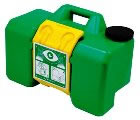
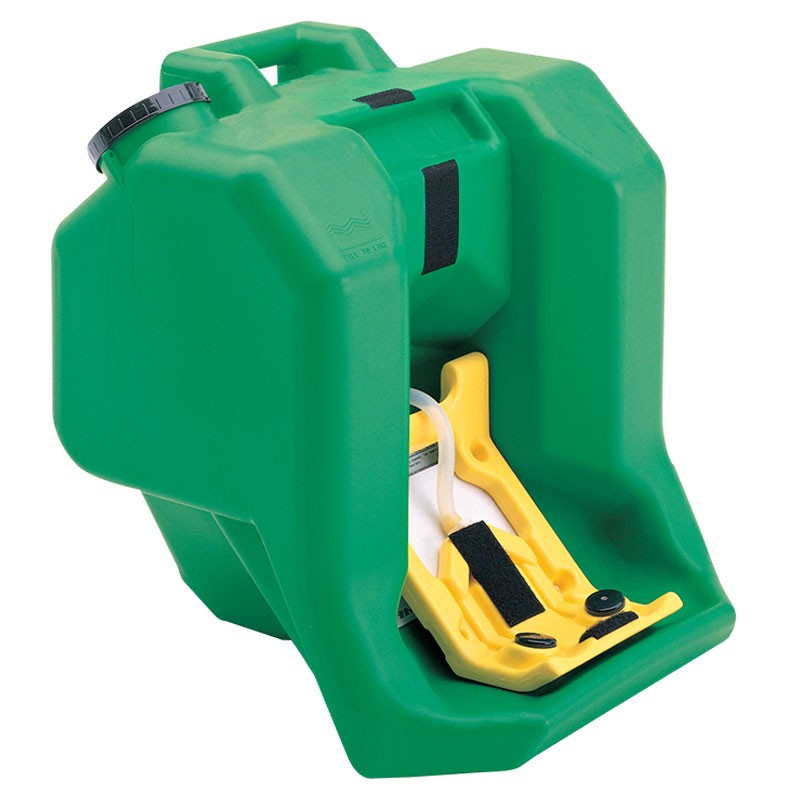
- Tank Style self contained stations also require the use of tap water but they use a preservative as part of the mixing. The preservative will help reduce the likelihood of bacterial growth but will not prevent a buildup over time. The solution usually expires after a six month period. Maintenance is required twice a year. The units must be cleaned and refilled according to the instructions of the manufacturer.
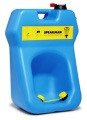
- Tank style self contained units with sealed cartridges do not require the use of tap water. There is no mixing involved. The sealed process is done in a clean room environment using purified water. Some units on the market today use a saline solution similar to tears in the human eye. Most cartridge based eyewash stations have a twenty four month shelf life. New cartridges can be easily installed in a matter of minutes on most models. A benefit with this type of unit is that it is a portable eyewash station that can be conveniently moved if necessary.
Basic First Aid for Eye Injuries and Uses of Eyewash Stations:
- First aid procedures for eye injuries should be established well in advance of an accident.
- For specks of dust or dirt in the eye, do not rub the eye because this can cause scratches and abrasions. Use eyewash and continue flushing the eye. If the speck does not wash out or pain and redness persists, then see an eye doctor.
- For a blow or impact to the eye, apply a cold compress. Do not apply pressure. See a doctor immediately if there is continued pain, blood in the eye or any visual disturbance. This could be the sign of internal eye damage.
- For objects stuck in the eye or punctures to the eye, do not try to remove the object from the eye and do not use eyewash. See a doctor immediately.
- For chemical burns, open the eye as wide as possible and immediately flush the eye with water. Continue flushing the eye for at least fifteen minutes. If possible, continue flushing the eye while in route to the doctor or hospital. The flushing fluid should be tepid or lukewarm. A doctor should be seen immediately.
- Keep in mind that water will have an adverse effect with some chemicals. Some materials react with water or water temperature will accelerate a reaction. An assessment of the chemicals being used and their reaction with water should be made in the initial stages of eyewash planning and set up.
Employee Awareness and Training:
It is imperative that your employees be aware that there are stations to flush their eyes available for them in case of an emergency. They must know the location of the station and the proper use of it. Once an accident has happened, time is of the essence. An employee should not be scrambling for help at that time. Time lost can mean the difference between a very minor accident and blindness.
Your ultimate goal should be to not have any eye injuries or accidents. The best defense against eye injuries in the workplace is for management to access the hazards and know the dangers. Use engineering controls such as machine guarding and work screens to keep hazards to a minimum. Workers should wear proper eye protection such as safety glasses and goggles.
If an injury does occur, first aid procedures should be well established beforehand so no time wasted. Plan for emergencies before one occurs! Have stations easily accessible and in good working order. Follow the guidelines set forth in the ANSI standards for eye protection and safety.
The information on this page is an original copyrighted article. We welcome you to link this page from your website. However, copying this article in whole or in part is strictly prohibited.
Disclaimer: We have provided this article as general information on the use of this article. We make no claims as to the accuracy or completeness of the information as it may apply to an infinite amount of conditions and situations. It is the responsibility of the person or persons reading and using this information to refer to the instructions and information provided by the manufacturer in the product package before testing or using this product. Users of this information agree to hold Select Safety Sales LLC harmless from liability of any kind relating to the use of this information.
